SynaptechAI · AI in Practice
Put the ideas
to work.
Read a little. Try something. See what changes.
A practical introduction and 30 hands-on lessons for learning to use AI with evidence, purpose and judgment.
Start hereAI that starts with youFind a practical starting point for understanding, creating or getting organized.
You have an idea, a question, or a task you keep putting off. Where could AI help?
Welcome to SynaptechAI. We exist to make artificial intelligence accessible, intuitive, and genuinely useful for everyday people.
You don’t need a technical background to join us. A real question is enough to begin.
What would you like
to do?
Choose a starting point. Explore a small example you could adapt to your own work.
Make an unfamiliar idea clearer.
Choose one concept you want to understand. Ask for an explanation you can question and put into your own words.
A prompt to adaptExplain [concept] using an everyday example. Define unfamiliar terms, then ask me one question to check my understanding.
Your part: check important facts against a reliable source.
A useful result takes
more than an answer.
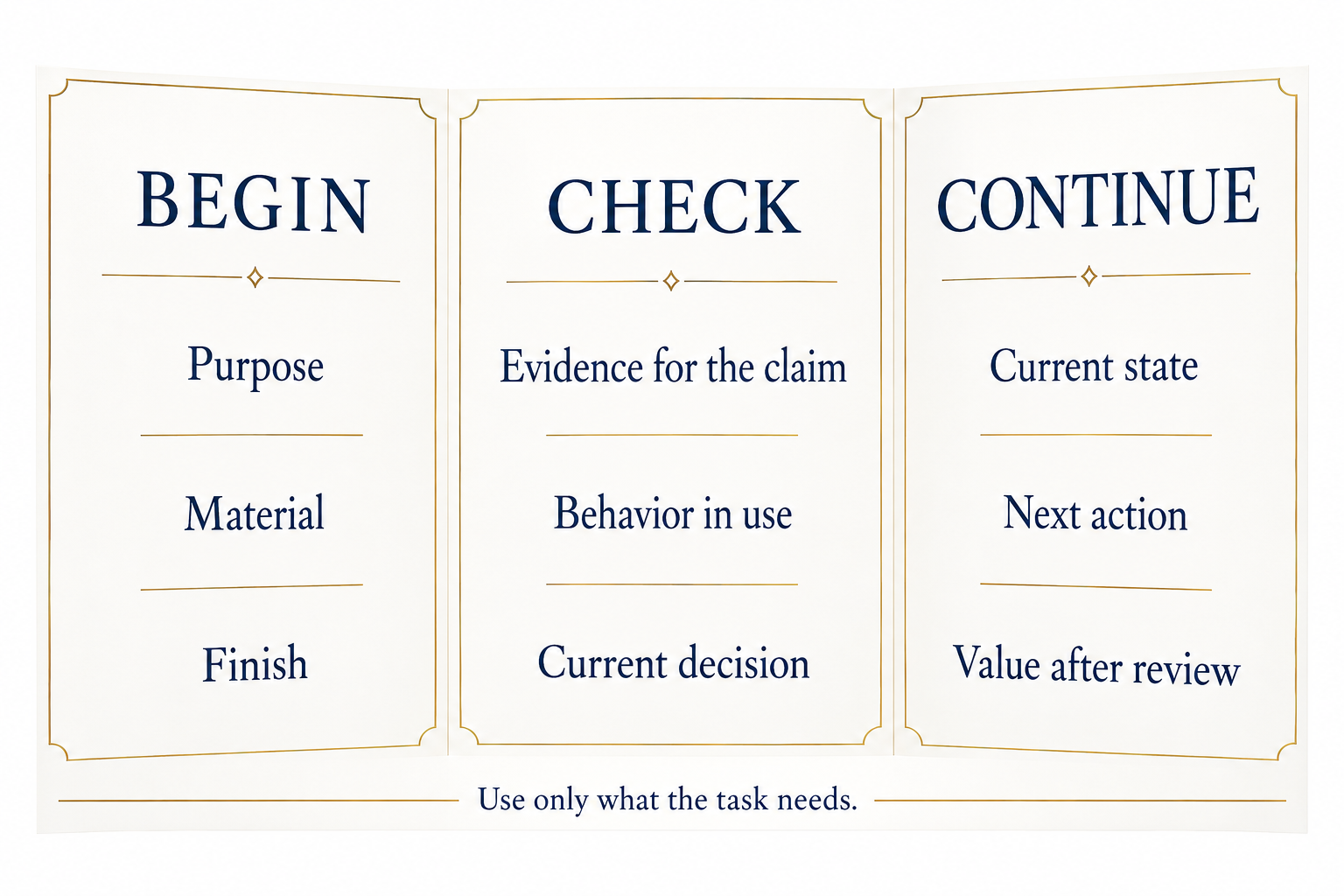
Imagine turning scattered notes into a guide someone else can follow. Explore each step to see where AI can assist and where your judgment belongs.
Give the work a clear purpose.
“Use these notes to help a new colleague understand the process. Keep it short and mark anything the notes don’t explain.”
You choose the source material, the reader, and the intended result.
Illustrative example; these are suggested steps, not a report of measured results.
Clear explanations.
Work you can examine.
Practical starting points
Explanations and methods for research, writing, creative projects, and everyday organization.
Lessons from work in progress
What we tried, what happened, and what still needs work as we build systems that connect knowledge, tools, and ongoing projects.
Room for your judgment
Conditions beside claims. Failures included. Corrections when we get something wrong.
Good technology should give you more room to think, choose, and create.
When we explore AI agents—systems that can carry out a sequence of steps toward a goal—we’ll explain what they do, where they need direction, and how to assess the result.
Let’s begin with
your question.
What would you most like AI to help you do? Bring your answer to the conversation on Substack.
Where would you like to start?
Understand something, create something, get organized—or keep exploring. Vote in the article’s poll and share your question in the comments.
Vote and join the conversation on Substack ↗Voting and comments take place on Substack.
A question to share: “I’d like AI to help me ___, but I’m unsure about ___.”
Welcome to SynaptechAI.
We’re glad you’re here.
Follow the sequence or open the question you need today. Every companion includes its full article and sources. Exercises use illustrative cases or clearly identified reconstructions; completing one is not proof of a business result.
Chapter 1 · Days 01–07
Begin with the evidence
Choose a purpose, supply useful context and find out what an answer can actually support.
- 01Explore
Find the claim that outruns its source
The claim desk - 02Explore
Pack the context that changes the answer
The briefing table - 03Explore
Separate a passing check from a usable result
The acceptance bench - 04Explore
Watch three kinds of change separate
The comparison window - 05Explore
Put the row relationship back
The table repair - 06Explore
Ask for an event, then weigh the answer
The interview room - 07Explore
Count the whole attempt
The effort ledger
Chapter 2 · Days 08–14
Make something someone can use
Turn material into a draft, preserve its meaning and test what a reader needs.
- 08Explore
Give the steps their prerequisites
The sequencing bench - 09Explore
Interrogate the verbs in a draft
The draft under glass - 10Explore
Edit the sentence without inflating the claim
The sentence studio - 11Explore
Refuse the trend the table cannot show
The missing cell - 12Explore
Repair the representation from evidence
The extraction workbench - 13Explore
Choose the form that does the job
The format workshop - 14Explore
Run the tiny reader trial
The deadline desk
Chapter 3 · Days 15–21
Carry the work forward
Keep current decisions visible, inspect handoffs and build routines with honest exception paths.
- 15Explore
Route the work from its current state
The next-action board - 16Explore
Leave tomorrow a place to start
The resumption note - 17Explore
Find the decision with authority
The decision timeline - 18Explore
Inspect the return before accepting it
The handoff return - 19Explore
Change one fact; change the expected action
The awkward-case test bench - 20Explore
Choose how much decision-making to delegate
The control dial - 21Explore
Build the missing-input branch
The routine runner
Chapter 4 · Days 22–30
Decide what deserves to stay
Count the work, examine the comparison, practice judgment and leave with a portable kit.
- 22Explore
Make maintenance part of break-even
The upkeep calculator - 23Explore
Spot the comparison that changed two things
The comparison editor - 24Explore
Translate time into rate without changing the claim
The headline arithmetic - 25Explore
Keep the correction connected to its origin
The provenance trail - 26Explore
Put review before the consequence
The action boundary - 27Explore
Explain the missing-source case from memory
The recall desk - 28Explore
Make a decision the evidence can carry
The keep / change / stop review - 29Explore
Build your portable working kit
The one-page kit - 30Explore
Choose the next question worth testing
The next investigation
Your place in the series
Your optional reading record is stored on this device.
No account or submission is needed. Exercise answers stay in the page unless you choose local saving or a download. Reading progress is not a learning score.