The question a second reader would ask
A useful review finds the missing information between “I understand” and “I can do it.”
Let's imagine someone opening the guide we've been building this week. They weren't there for the conversation that produced it. They have the page in front of them and a job to do.
“Compare this with the previous version,” it says.
Their first question may be very ordinary: Where is the previous version?
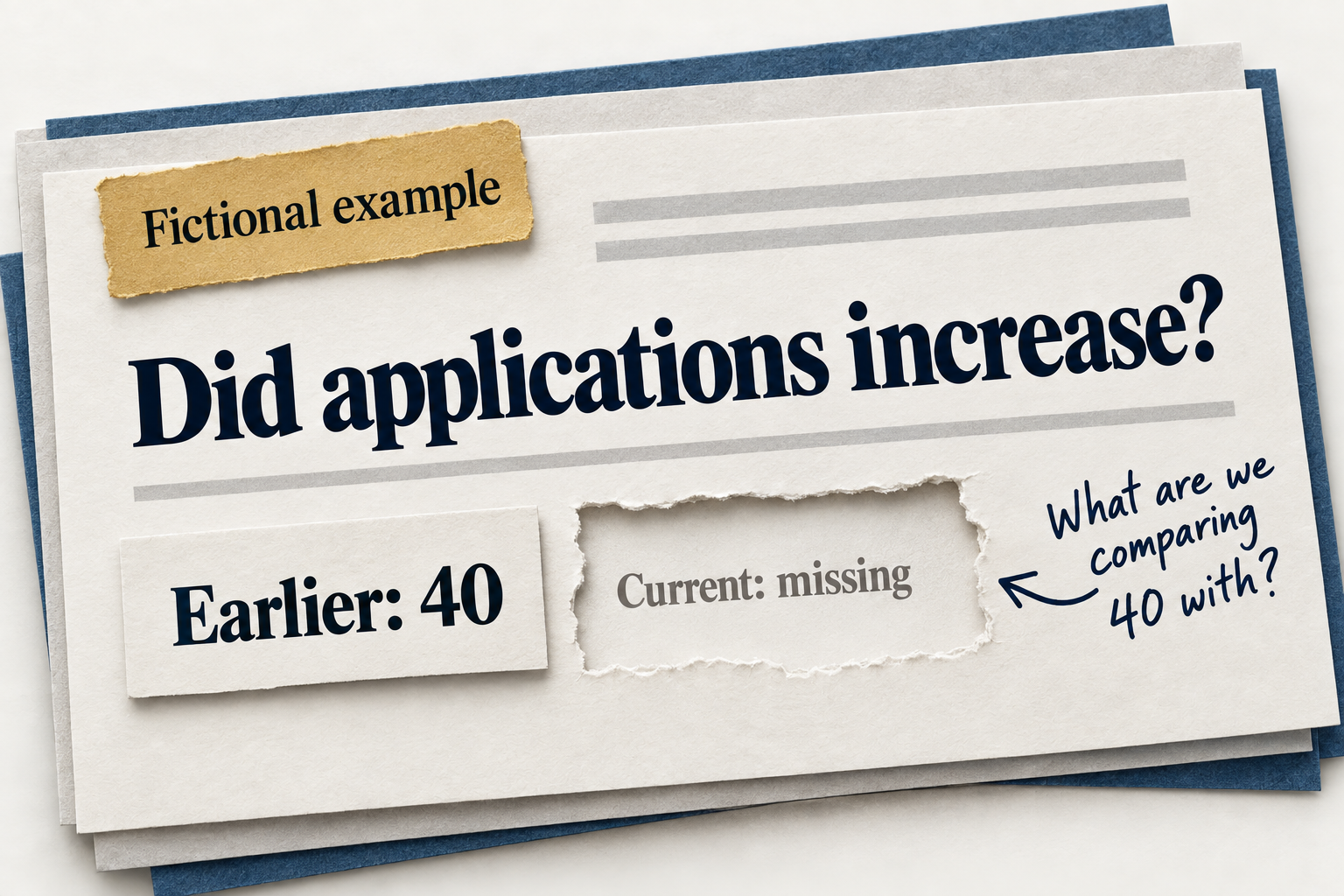
The illustration makes a similar gap concrete. In this fictional example, a page asks whether applications increased, but supplies only the earlier count of 40. Without the current count, the reader cannot answer. The useful review names the missing comparison instead of guessing a trend.
That question can feel almost too obvious to write down. But the person who knows the answer is usually the person least likely to notice that it's missing.
Here is a short review I would want from a fresh reader. This is an illustrative note, not a quote from someone who tested our example:
I understand why the comparison matters. I don't know which saved copy you mean. I also don't know what to record if I can read the article but its chart won't load. And after I describe a meaningful change, who receives it?
Three questions. Three different gaps: a missing input, incomplete access and an unclear handoff. None can be repaired by making the heading more engaging.
In our actual source-checking procedure, a fresh Codex session followed a limited path through the instructions and recovered from a deliberately missing reference. That gave us evidence about those parts of the procedure. It didn't establish that an independent human could follow the entire thing. Keeping that distinction helped us describe the result accurately.
Let the difficulty become visible
If someone is willing to try your guide, give them the material they are supposed to have and one concrete task. Ask them to tell you where they stop, search or guess. Resist supplying the missing sentence before they've had a chance to need it.
The purpose is to discover what the page must carry. A spoken explanation can get a person through the task while hiding the fact that the document cannot.
If no other reader is available, you can still do useful work. Open the guide later, follow its links and check whether each input actually exists. Ask AI to flag unexplained references. Walk through an exception. Just call that a self-review or model critique; neither supplies evidence of another person's experience.
The smallest revision may be enough. “Use the saved copy attached to this check” resolves a location problem if that attachment is actually there. “Record which material you could not inspect” prevents a partial reading from looking complete. “Send the proposed change to the named owner” makes the handoff usable when an owner has been supplied.
A second reader doesn't have to redesign your work to improve it. Sometimes they give you the one question your familiarity kept you from asking.
Which sentence in your draft depends most on a conversation the reader never heard?