The failure worth keeping
A correction becomes reusable when you preserve what made it necessary.
“Post for SQL” looks like a phrase you might skim past in a transcript.
In one of our speech checks, it was a misrecognition of PostgreSQL, the database name. The recognizer retained the dollar amount in the same sample but got that technical term wrong. We corrected the phrase using the clean original and its script, while preserving the raw output.
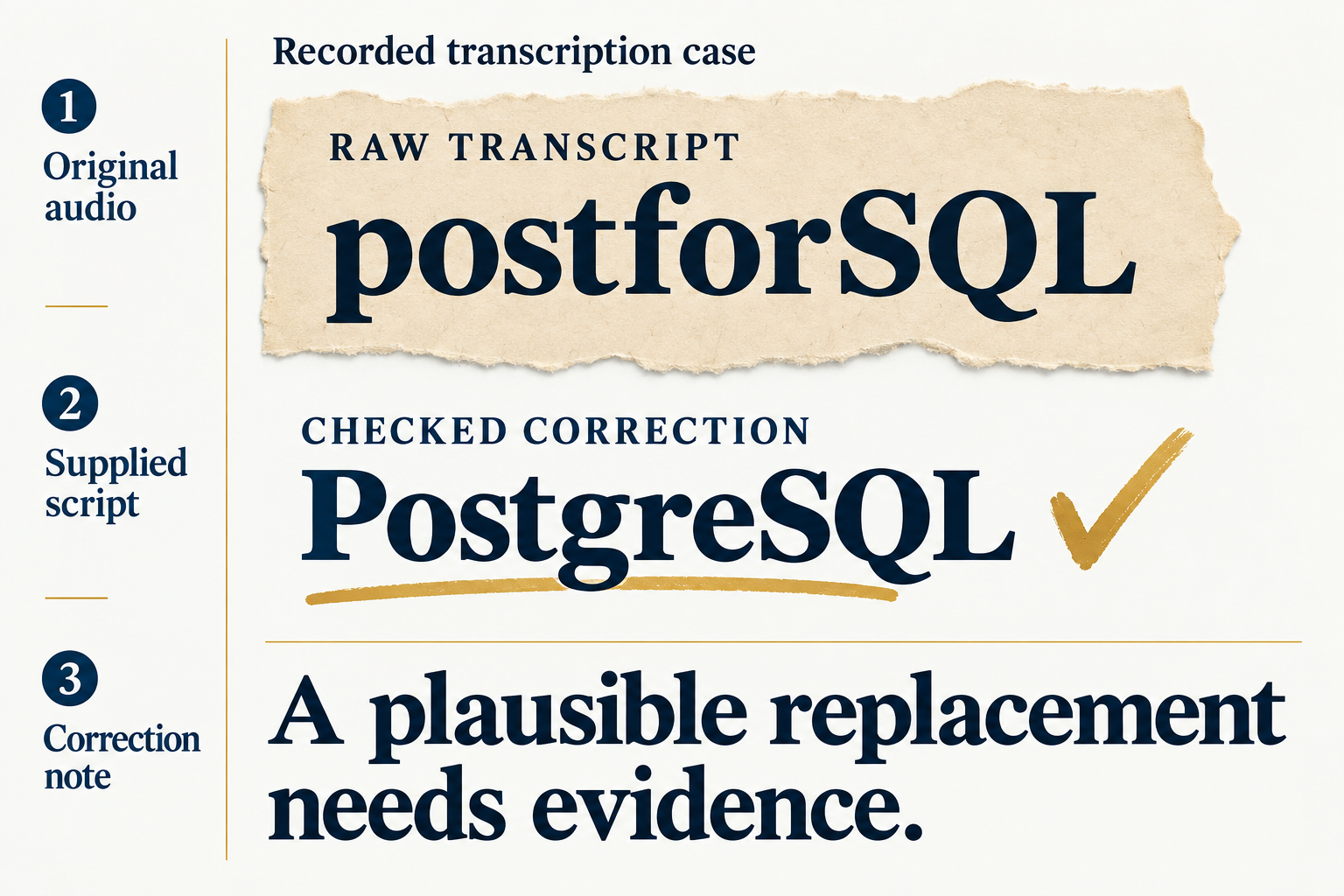
The sample had added noise for a controlled check. It wasn't a real meeting, and that one correction doesn't tell us how the recognizer performs on every speaker or recording.
It does give us a useful failure to keep.
Keep enough to explain the repair
If we saved only the corrected transcript, a later reader could use the right word but wouldn't know why it changed. If we saved only a note saying “transcription is unreliable,” we'd have a broad warning with little practical value.
The useful record sits between those extremes: the affected phrase, the original evidence, the corrected version and the condition that made the check important.
For this case, the lesson is narrow. A technical name in a noisy transcription deserved a check against the original. It doesn't follow that every ordinary word needs manual review, or that a familiar-sounding replacement should be accepted without evidence.
That last point matters. We weren't entitled to replace an unfamiliar phrase merely because another phrase seemed more plausible. The clean source and script supplied the basis for the change.
Repair at the layer where the problem happened
Think back to Day 12. A bad table extraction needed a better representation of the table. Rewriting the final answer more elegantly wouldn't restore the missing value.
The same reasoning helps here. If the source audio is unclear, a more confident summary doesn't fix it. If the source is clear but the transcription is wrong, correct the derivative with attribution. If the transcript is accurate but the summary misinterprets it, the repair belongs in the summary.
Provenance is the record of where material came from and how it changed. You don't need a complicated system to begin keeping it. A link to the original, a preserved raw copy and a note about a substantive correction can make the next review possible.
A saved failure is a candidate lesson
Our work keeps history separate from reviewed guidance. That prevents one incident from silently becoming a rule for every future task. A correction should earn its broader scope through relevant evidence.
For your routine, choose one failure that changed what you would check next time. Write down the trigger, the wrong result, the supporting evidence for the repair and the limit of the lesson. Then keep a small case you can revisit after a revision.
For example, if an unavailable source was once reported as unchanged, retain an unavailable-source case and its expected unresolved result. That connects today's failure record to Day 19's regression check.
The purpose is to make a future mistake easier to recognize. You can keep the lesson without turning every task into a retelling of what went wrong.
A good correction leaves the work more accurate. A useful failure record also leaves the next person better prepared.